New Dustin Inman Society

  • facebook
  • x
  • youtube

"One of the penalties for refusing to participate in politics
is that you end up being governed by your inferiors."
Attributed to Plato

WE SUPPORT POLICE OFFICERS • ALL LIVES MATTER

  • Home
  • Sign up for alerts
  • Mission Statement
  • DIS ADVISORY BOARD
  • New DIS Blog
  • Original DIS Blog
  • CONTACT US
Home » You searched for mou » Page 5

Search Results for: mou

GOP state senators and a Democrat-led ‘Americans last’ tuition bill #SB 264

June 27, 2023 By D.A. King

Photo: Georgia Health News

The proposed tuition savings benefit would not apply to Americans


There they go again. A group of Republican state senators have signed on to a Democrat-led bill that would change state law on the current residency requirement to access instate tuition in public colleges. And the left-wing AJC is unapologetically pushing the bill in its opinion posts with agenda-driven misinformation.  

At issue is Senate Bill 264 sponsored by Stone Mountain Democrat Sen. Kim Jackson. The number two signer on the bill is Republican Sen. Mike Dugan of Carrollton. The other two Republican cosponsors are Sens. Billy Hickman (Statesboro) and Chuck Payne (Dalton).

The legislation is in the Senate Higher Education committee where Hickman is the chairman and Payne is a member. Hickman held an initial hearing on it after Crossover Day and with a question to the sponsor proved he didn’t understand the bill he had signed as a cosponsor. So did Payne. (transcript here).  

If passed and signed into law by Governor Kemp, the bill would amend the current requirement that all new Georgia residents must live here for a year before they can access the much lower instate tuition rate in our public colleges and technical schools. 

But the proposed change would not apply to Americans.  

The Democrat legislation these Republicans are pushing only applies to foreigners with refugee or “special immigrant” status along with otherwise illegal aliens who the Biden administration moves into the U.S. as recipients of temporary “Humanitarian Parole.” All of these categories create legal immigration status for the recipient. 

Under SB 264 there would be a carve-out allowing this group to “migrate” to Georgia from other countries and access instate tuition rates upon arrival. They would not have a twelve-month residency waiting period as do Americans. 

U.S. citizens moving here from other states would still pay the much higher out of state tuition rate for their first year as a new Georgian. 

A rerun of a failed Republican-led House bill (HB 932) from the 2022 session, it’s difficult not to refer to this gem as another “Americans last bill.’ Insider Advantage readers with good memories may recall my colleague Inger Eberhart’s 2022 guest column (‘Vote on HB 932 Putting Refugees Ahead of Americans’) daring the House Higher education committee to pass it out. Inger explained that bill with “In the recent hearing on HB 932 several Democrats vocalized their enthusiastic support for making Americans pay three times more public college tuition than an Afghan refugee in Georgia.”  

Exactly how much more tuition would an American pay in our public colleges than foreign nationals?  

In Dalton: According to the Dalton State College website, for on campus students the estimated tuition and fees per semester is $2,123.00 for instate tuition. It’s $6,334.00 for students being charged the out-of-state rate. That’s a difference of $4211.00 per semester if my American math is correct. 

In Statesboro: As per the Georgia Southern University website, instate tuition for undergraduates was $2732.00 for fifteen hours in the Fall 2022 semester and $9641.00 for out-of-state rate (it’s the same for Spring, and Summer 2023). That is a difference of $6909.00 per semester. 

Our guess is that cosponsoring SB 264 wasn’t at the top of any “end of session at the Gold Dome wrap up” presentation at grassroots GOP meetings for Hickman or Payne. 

There is a Democrat companion bill in the House, HB 640, with one GOP cosigner. They are both being pushed by the leftist Coalition of Refugee Service Agencies (CRSA), the Business and Immigration Partnership for Georgia (BIG), Mark Zuckerburg’s FWD.us and – less openly, by the Georgia Chamber of Commerce. The FWD.us lobbyist under the Gold Dome is an illegal alien. 

You read it here first, but there is more to the story. 

A version of the above column was posted on the subscription website Insider Advantage on June 8, 2023.


 

Filed Under: Older Entires

Pro-enforcement Resolution Distributed by DIS For GA GOP Conventions

April 22, 2023 By D.A. King


Update: The below Resolution was passed by the 3rd and 7th GOP district conventions on Saturday, April 22, 2023. 

The Dustin Inman Society produced the below resolution and offered it to several county level Republican party activists before the county conventions in February. We hear several counties passed it out. We know it is also being considered in today’s district conventions. We are confident it will pass in many of those as well.

RESOLUTION IN SUPPORT OF ENFORCEMENT OF IMMIGRATION LAWS

Advocating for the attrition of Georgia’s illegal alien population through enforcement of state law and recognizing that illegal immigration amounts to organized crime largely caused by illegal employment that is ignored by elected and appointed officials.

WHEREAS, estimates of the number of illegal aliens in Georgia range up to 400,000 and that whatever the actual number no source of data has the number currently in decline; and

WHEREAS, illegal immigration attacks the rule of law upon which the American Republic and Georgia were founded and has created a significant reduction in the quality of life; and

WHEREAS, innocent Georgians are being murdered, raped, kidnapped and molested by illegal aliens in senseless and fully preventable crimes; and

WHEREAS, with the stated intention of reducing the illegal population, beginning in 2006 various well-crafted state laws were put in place aimed at making life difficult in Georgia for illegal employers, illegal aliens and elected and appointed officials who would ignore the intent of these laws; and

WHEREAS, state laws offering protections to Georgians that outlaw ‘sanctuary city’ policies are openly and defiantly violated without prosecution; and

WHEREAS, in today’s Georgia we see an obvious, troubling, and dangerous policy of intentional avoidance of the entire topic of illegal immigration by most of our state and local elected and appointed officials including our Republican state legislators and Gov. Kemp; and

WHEREAS, in 2018 Governor Kemp campaigned on making criminal aliens a priority in his administration, ending sanctuary city policies and to track and deport “criminal illegals” by pushing legislation through the state legislature that would create a public database of “criminal illegals”; and

WHEREAS, pending legislation in the General Assembly known as HB 136 would provide for a regular public report of criminal aliens serving time in the state prison system and list the crimes they committed in Georgia has stalled under the Gold Dome; and

THEREFORE, BE IT RESOLVED, that 7th District Republican Party views that illegal immigration represents a clear and present danger to our children, our communities, our state, our nation, and our way of life.

 BE IT FURTHER RESOLVED, that this position of the 7th District be transmitted to the entire elected state Executive Branch and the entire Republican Legislators encouraging the passage of  HB 136.


Filed Under: Older Entires

The Dustin Inman Society vs the Southern Poverty Law Center in Newsweek magazine

April 21, 2023 By D.A. King

Photo: DIS

Newsweek magazine

Conservatives Wrongly Demonized as ‘Hate Groups’ May Get Justice at Last | Opinion

April 21, 2023
Tyler O’Neil
“The Left has a long and ignoble history of grasping at straws to demonize conservatives, but one organization arguably encapsulates this strategy more than any other. That group may finally have to face accountability for its defamation. The Southern Poverty Law Center publishes a “hate map” plotting “hate groups” across the United States. Of course, the map features chapters of the Ku Klux Klan and neo-Nazi groups like the National Socialist Movement, but it also includes a broad swath of conservative organizations whose major crimes amount to disagreeing with the SPLC’s policy positions. Take the Dustin Inman Society, for example. This small Georgia-based nonprofit essentially consists of one man, D.A. King, who was moved to advocate against illegal immigration by the story of a Georgia boy who lost his life at the hands of an illegal immigrant in a 2000 car crash…” please read the entire piece here.

Filed Under: Older Entires

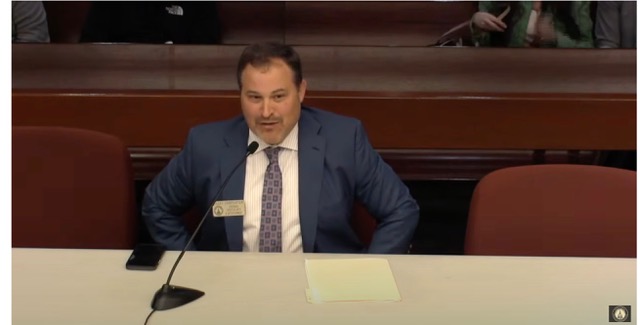
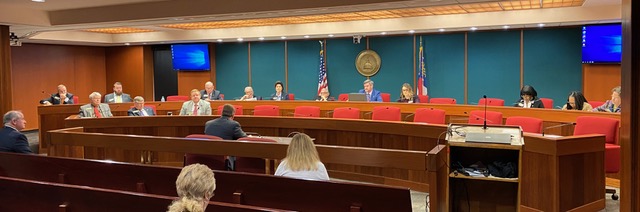
“Opportunity Tuition” for illegal aliens with DACA:Transcript, audio & official video record of initial hearing, HB 131 GA House Higher Ed Committee, Feb 22, 2023 #KaseyCarpenter

February 22, 2023 By D.A. King

Rep. Kasey Carpenter (R-Dalton) HB 131 sponsor.

Hearing, 1:00 PM Room 606, CLOB Feb 22, 20

HB 131 “Opportunity Tuition” for “Opportunity Students.” 

Video here.

Audio on the bottom.

Transcript by Rev.com. My cost $120.00 and 11 hours.


Chairman Chuck Martin:

HB 131, Chairman Carpenter.

Rep Kasey Carpenter (R), Dalton, (Chair of a different committee) bill sponsor:

Thank you, Chairman, committee. We have before you LC491330S. This is language that we protected over the interim, I believe, on this important matter I think, for the workforce of Georgia. Um, it is very similar to, um, to what we’ve done in the past, but I just want to walk you through the bill real quick. I know time is of the essence, uh, on a lot of issues. But basically, this bill would help, help Georgia’s workforce.

There’s a, uh, roughly 19,800 individuals with, uh, the status of DACA in our state, um, that ranges between the ages of 15 to 41 that currently, um, do not have the opportunity in the State of Georgia to attend certain colleges within our systems at an affordable rate, and so that’s what this bill seeks to address.

Um, just a little bit of highlights of what this bill does, does do. All right, this bill would allow individuals that have been in the State of Georgia since 2013 that have received their DACA status, that have not committed a felony or high, high aggravated misdemeanor, to attend certain colleges or in certain programs within those colleges at a rate that is more than in-state but obviously less than out-of-state. That rate would be set by the Board of Regents, um, on an individual at university or college basis, um, depending on their actual cause for that in-, for that institution.

We have talked about the declining, uh, enrollment in our colleges, um, across the state for some time. We have talked about border waivers that we offer to kids from Florida, from Tennessee, from Alabama, from South Carolina, and this piece would allow kids that have gone through our K-12 systems that have graduated that want to continue on in their educational process to attend them at a rate that’s affordable.

I have Dalton State in my community. Uh, for a DACA recipient that graduated form Dalton High School is a valedictorian to d-, to attend Dalton State, it’s $15,000 a year. So what happens is these kids leave the State of Georgia, they go to other states to, to pursue higher ED opportunities, where after a year they can receive that in-state tuition in c-, in certain areas.

And so the, the, the key is, is what do we need to do as a state to make sure these individuals that are high achievers stay in our state so they can add value to our workforce? For you that are not familiar with the DACA program, um, it does require them, it give them a TIN number so they are able to work, legally work, legally get a driver’s license to, to, to go back and forth to work and to school, and so and then would be required to pay taxes on income in the State of Georgia and federally.

So this, these are our Georgia tax payers, or will be Georgia tax payers when they’re, you know, they’re 15 when they’re out of school. Um, and I think it’s a great opportunity to offer these folks, um, education to make them achieve what they can achieve, because I’m a firm believe, uh, we can fight all we want to about immigration, but I’m a firm believer that these individuals are here to stay, and the Federal Government will not, uh, load all these individuals up and take them back to their respective countries that they really don’t know because they’ve been here since 2007.

So, um, without, without really beating the bill to death, that’s really what it does. There’s sections in here about USG and for technical college. It makes sure that it applies to both. Um, and without, I’ll be glad to take any questions without holding you up too long.

Chairman Chuck Martin:

Thank you, Chairman Carpenter, you have two. Um, Dr. Clark, [inaudible 00:04:04] number 4. Dr. Clark.

Dr. (committee member/Rep) Jasmine Clark:

Um, thank you, Mr. Chair. Thank you so much for bringing this bill. Um, I just have a couple questions. The first question is line 99. I know, uh, prior to the sub, the um, the range f-, or there was a range instead of it being 110% of the, uh, in-state tuition, it was 101-110. How did you all fall on the 110%.

Chairman Carpenter:

I think we just … I d-, I think we wanted to be clear that in the State of Georgia we were, we would allow this opportunity, right, but we wanted to make sure that it wasn’t so close to the in-state, right, that it would create problems and issues, and like most legislation, y-, y-, you, you change, you, you do what you can to make sure you get it across the finish line, and that is what this piece would address.

Dr. Clark:

All right, thank you. And um, uh, a followup question. Um, a little, uh, I guess, concerned about, um, in line 102 where we say priority, consideration, uh, to enrollment applications, and then it lists like who gets priority. Um, um, are there any concerns about that being constitutionally, like a little iffy, because it could been seen as discrimination.

Chairman Carpenter:

Uh, I, I think that, um … I- I- I personally don’t think so. Obviously, I’m not a constitutional scholar, but I think the, uh, the intention of the paragraph is to say, look, we’re going to check in-state first, out-of-state second, opportunity students third. Uh, it’s just to make it very clear that American citizens are first, and the the, and the opportunity citizens are second. And I think that’s an important pieces, um, if you look across the landscape of the country, that’s a p-, that’s a pretty important piece for the longevity of this legislation.

Chairman Chuck Martin:

If, if I … If I may Dr. Clark, as well, let me address that. I- I edited that language, um, after talking with somebody. It’s a bit of a belt and suspenders situation in that, um, if, if you’re, in order to be an eligible institution you cannot have turned away applicants, qualified applicants in the last two academic years, but th-, this is just a belt and suspenders, you know, put right there in black letter law that, um, um, you are going to give priority to in-state and out-of-state. Again, if you’re turning anybody away, you, you were eligible in the first place, so this wouldn’t apply.

L- let me sound just for the committee here too. S- somewhere in the, the creation of, um, um, the, the sub, uh, we, we have, um, um, created on lines 133 CCSG, and on line, um, 49, that, that should read, uh, uh, multiply times, um, undergraduate in-state tuition. Um, that, that was, um … A- and, and, um, line, line 43, the opportunity t-, tuition, you know, it’s, it, that’s basically, uh, I think everybody is reading it the way it’s supposed to be r- read, but it, it’s technically [inaudible 00:07:14].

The, the opportunity tuition is 110% of in-state tuition, not 110% of out-of-state tuition. Just, uh … W- we’ll, we’ll have to correct that, this first hearing on the bill, but-

Chairman Carpenter:

That … That’s right, and then I think-

Chairman Chuck Martin:

[inaudible 00:07:26] I think the ch-, the gentleman had corrected that in one of his subs, and then I think when, uh, the second sub was made that it was, it was [inaudible 00:07:31].

Chairman Carpenter:

Yeah, so I mean … I- I think that the point is, right, and it, and it’s already been addressed in the uh, there’s a lot of naysayers out here on this legislation that say these are going take others, other citizen, Georgia seats in, in colleges, and that’s not what this does. This bills says that if this university or college has capacity, then they can attend and fill those empty seats.

Uh, you’ve heard the chairmen in the past talk about the airplane scenario, right, where you’ve got an airplane going from Atlanta to Arizona, uh, you’ve got five empty seats, is it worth selling those five seats at a, at a, at a different rate just to fill those seats? And I think that’s the, that’s what this legislation, not only helps the workforce but also fills seats in the universities, colleges.

Dr. Clark:

Thank you, um, Mr. Chairman, and thank you for bringing this, uh, piece of legislation. I kn-, remember going down to, uh, Dalton State for a visit, and I know that Dalton State has a, uh, a great success, um, rate with these DACA students.

Chairman Carpenter:

Yeah. Yeah. It’s … It’s a, uh, Dalton State’s, uh, one of Georgia’s few Hispanic institutions, um, and rec-, received federal funding for that, and uh, obviously it’s something that, uh, you know, as a community it’s important to us. We have a, my district’s 51% Hispanic, and so having an educated, uh, workforce is important for Northwest Georgia and, and the whole state for that matter.

Dr. Clark:

Thank you.

Chairman Chuck Martin:

No further questions. If there are no further questions we’ll move on, move on to testimony. I’ll … I’ll note on the item. Okay, we, uh … We have about 15, uh, people. We, we have about an hour left. Um, so we’re, we’re going to ask you, everybody, to keep, because we have two more bills, um, keep their comments to the two or three minutes. Mr. King.

D.A. King – Dustin Inman Society:

Good afternoon, Mr. Chairman, members of the board. My name is D.A. King and I am president of an organization that is 501C4 non-profit according to the IRS, and our goal is to make Georgia as unattractive to the organized crime of illegal immigration as possible. I came today to represent a lot of people who want this bill to die right here in this room for the following reasons. There’s a strong ad argument going around that there’s concern about illegal aliens with DACA taking up seats, making those seats unavailable to Americans and legal immigrants. That’s not the argument.

The argument is, and it’s impossible to deny, that this opportunity tuition bill is in fact creating opportunity for people in the country illegally, no matter whose fault that is. It is unavailable to Americans and legal immigrants who didn’t migrate to Georgia. I have friends in Michigan and in California who want to come to school at KSU, they cannot afford the tuition. What you’re doing with this bill is considering whether or not you will vote to give opportunity tuition to people in the country illegally while it’s denied to those same Americans and legal immigrants.

There was a time in, in, on this campus where the majority of the legislators were what we call pro-enforcement. I- I don’t know if that’s sure anymore, or true anymore, but this, this bill was certain to be an indicator. Um, I- I also want to bring up, and I’ll be very brief, but I’ve been here a long time, and in 2012, now Congressman, then State Senator Barry Loudermilk passed a bill in the senate that said illegal aliens could not attend any USG or technical college system school. The compromise was made that people here illegally could attend a certain number of schools as long as those schools did not, or had not declined an application for enrollment. That was the deal.

The reason that you have the clause or see the clause in this bill that it, opportunity tuition is only available for attendance to schools that haven’t turned anybody away is a result o-, o-, of just what I told you, what happened in 2012. I can go on, but I want to make it clear one more time. The argument was never whether or not we’re going to have a limited number of seats, and people are going to, illegally going to fill them. That’s a strong an argument, it was never said. It is impossible to deny, deny one more time, that opportunity tuition does not create an opportunity for Americans and legal immigrants who want to come here.

The tuition at KSU, I did the math, I’m no wiz, but I double-checked it, 15 hour class load at KSU for one semester would come out to be $7000 more for my friend’s son to come here from Michigan to go to KS-, KSU than it would be for somebody whose in this country illegally. There’s a lot o people out there watching this bill, and a lot of us consider a decision to do this to be very, very un-American. I’d love to take questions, Mr. Chairman, if you have time. Thank you very much.

Chairman Chuck Martin:

Okay. If we have questions, thank you. Um, Ms. Staten, Straten, I’m sorry.

Kathy Statham:

It’s Statham.

Chairman Chuck Martin:

Statham, I’m sorry. Yes, Ma’am. Yes, Ma’am.

Kathy Statham:

Hi, Mr. Chairman, and committee members. My name is Cathy Statham, I am a legal citizen of the United States and I reside in Georgia. I am against this bill and I would like for it to be killed today. Uh, you’ve heard the old saying, “You could lipstick on a pig, but it’s still a pig.” We go over this almost every year, and this is just a different bill with a different name, uh, no matter what you call it. Uh, this bill, and these are my notes, but I want to make sure that I cover everything quickly, this bill is sep-, special opportunity to illegal aliens that is forbidden for other Americans that come here for education in our state.

In other words, if you live in Tennessee and you come to Georgia, you must pay out-of-state tuition. So why are we going to give any illegal priority over American citizens? So no matter what you call it, whether you want it to be opportunity this year, or next year, or whatever year comes up, American citizens come first. My taxpayer money should not be paid for any tuition for anyone that is in this country illegally. Thank you very much.

Chairman Chuck Martin:

Thank you, Mr. Straits-

Kathy Statham:

Statham.

Chairman Chuck Martin:

Statham. Yes, Ma’am. I’m sorry. David Garcia.

David Garcia GALEO:

Uh, Chairman r-, two seconds while they’re coming up. Just-

Chairman Chuck Martin:

That way we’ll keep going. I’ll-

David Garcia:

[inaudible 00:14:35]-

Chairman Chuck Martin:

… write it down. We’ll get to you, we’ll, while [inaudible 00:14:40].

Speaker X:

All right, David.

Chairman Chuck Martin:

[inaudible 00:14:40]. We’ll get back to you. We’re going to … We’re going to stay on track.

David Garcia:

Good afternoon, Chairman and committee. I’m David Garcia, and I work for a 501C4 advocacy organization named GALEO Impact Fund, and we advocate for the Latino Hispanic community throughout Georgia, um, and um, I- I guess I’d like to start by saying that in-state tuition for DACA recipients or opportunity tuition is important for Latino voters throughout the state. Uh, and I’d also like to start by adding that DACA recipients are not here illegally. Um, so the organization that I work for, w-, we don’t support the, uh, the, the, the sub to bill in it’s current form, um, f- for a number of reasons, and I, I’ll list those reasons.

Uh, the current conditions on Georgia residency severely limit the number of people who have access, and uh, we don’t want there to be a second tier admissions process that it categorizes people by their tuition classification. Uh, the current continuous conditions on Georgia residency severely limit the number of people who have access since it’s tied to property ownership and Georgia, and getting, uh, Georgia ID, and we don’t want there to be a second tier admissions process that categorizes people by their tuition classification.

Um, with all that said, um, we, we, we think it’s great that, that this bill was introduced, and we think it’s a step in the right direction. Um, and I, I’d also, uh, like, like to bring attention back to the bill’s intended purpose, which, which is to develop our workforce and, and to support DACA recipients. And then I- I, I’d mostly like to focus on the supporting DACA recipients component. So the, the, the DACA recipients who are eligible for this bill are, are exceptional students. Uh, they have overcome tremendous challenges, and our state has already invested a considerable amount of resources in their K through 12 education.

Uh, they are not seeking a handout or entitlements, uh, they want the same opportunities as other Georgia high school graduates [inaudible 00:16:46]. Um, and, um, I- I-, I’d like to … I’d like to bring up, uh, two, two Georgia high school graduates and University System of Georgia graduates who, who are also DACA recipients who’d like to talk about their experiences.

Chairman Chuck Martin:

Well, we’re, we’re doing two minutes each, and you’re over yours.

David Garcia:

Okay.

Chairman Chuck Martin:

They’ve signed up?

David Garcia:

Yeah, they’re the next people on the list.

Chairman Chuck Martin:

[inaudible 00:17:07]. Then … Then we’re going to go to them.

David Garcia:

Okay. Thank you.

Chairman Chuck Martin:

I have Ms. Garcia.

Speaker X:

That’s right.

Chairman Chuck Martin:

Mr. Garcia? Miss? Okay. I’m having trouble. You, you wrote really fast and I couldn’t tell what the first name was. Yes, ma’am.

Maria Garcia:

[inaudible 00:17:21] Garcia. Hi. Uh, my name is Maria [inaudible 00:17:25] Garcia. I was brought to this country when I was only three years old. Um, that was 25 years ago. I am now 27. Um, I grew up in Georgia, Clayton County. I went to Thurgood Marshall Elementary, Morrow Middle, Morrow High. I graduated with over 4.0 GPA in the high school to my surprise. I, um, didn’t know. I wasn’t [inaudible 00:17:47] with it until I was in high school, until after I received DACA in 2013. Um, and everything I’ve paid in terms of tuition has been out-of-pocket, no handouts. Um, and as of recently, no loans.


So just to illustrate, I brought my 2016 tax statements. It’s a 1098T for Kennesaw State. I paid $22,640. Um, and in 2017 I paid $20,144. So hypothetically, um, I had not started, sorry, I went to Georgia [inaudible 00:18:21] the first two years, transferred to KSU. So if I’d done all four years at KSU, I would’ve paid over $80,000 dollars for a public school education. I am currently at my master’s program where each class is $4000, so if I wanted to take two or three classes, I would be paying around 8 to $12,000, uh, per semester, which is really hard, um, especially for someone who, um, doesn’t receive otherwise any type of private assistance, uh, in terms of, uh, scholarships, um, and someone who just doesn’t make enough.

I had to take private loans for this, which is the only reason I can continue my education. Um, and I’m a unicorn. I’m not … I c-, uh, I graduated college, but I am one of many, many, many DACO recipients who couldn’t even, uh, start the first semester. Um, thank you.

Chairman Chuck Martin:

Thank you very much. Um, Raphael. Raphael. Yes, sir. And, uh, it looks like it’s A-R.

Raphael Aragon, illegal alien:

Yes, yes.

Chairman Chuck Martin:

 But pronounce your last name for me.

Raphael Aragon:

Aragon.

Chairman Chuck Martin:

Aragon, okay. We’re going to have to s-, get everybody to print in the future. Yes, sir. Go right ahead.

Raphael Aragon:

It starts with an A, but yes, it’s pronounced Aragon. Thank you for hearing my testimony.

Chairman Chuck Martin:

Yes, sir.

Raphael Aragon:

Um, my name is, uh, Raphael Aragon. Um, I came to this country when I was six years old. I’m a Georgia, I’m an undocumented Georgian, I’m a Georgia tax-payer. I’ve lived here for, uh, the vast majority of my life and I love this state. I love contributing to it. I love being a part of it. Um, I graduated from Dunwoody High School, uh, in 2015. When I graduated from Dunwoody High School, I came to find out that there were no schools in Georgia that were acc-, accessible to me, um, because of the cost, um, despite how hard I had worked in high school to graduate.

Um, luckily I was awarded a full ride scholarship to a school in Connecticut, um, where I met tons of incredibly bright, incredibly intelligent undocumented Georgians who had, uh, the same experience that I had. They left Georgia because there were no opportunities for us here. Um, through my, my, uh, bachelor’s, my undergrad, I, um, I, the organization that a- awarded my my scholarship gr-, um partnered with Oglethorpe University, um, and so I was able to return home to be with my family and study here in this great state. Um, but unfortunately most of my classmates, most my peers in Connecticut, uh, did not do the same.

Most of them stayed in Connecticut because they felt like it was a more welcoming and, um, supportive environment, um, and upon graduation many of them were, uh, scouted and, uh, uh, made offers by companies and organizations in the Northeast United States area, um, and they accepted those offers, uprooted their families from here, from Georgia, their small businesses, their, um, their whole entire economy they took from Georgia to this, the Northeast United States.

Um, so many of them graduated with degrees as engineers, um, computer science degrees, things that I think would be valuable to Georgia, um, and I think it’s an incredible, uh, and unfortunate loss of the investment that this state has made in us in our K through 12 education, um, to just allow these bright, in- intelligent people, um, who love this state and want to continue living here to go somewhere else. Um, I … That, that’s … That’s all I have. Thank you.

Chairman Chuck Martin:

Thank … Thank you very much. Thank you. Maria del Rosano. Did I get that right?

Maria del Rosario, legalized illegal alien and ethnic activist:

It was … It was close. Thank you, uh, Chairman. My name is Maria del Rosario.

Chairman Chuck Martin:

Rosario.

Maria del Rosario:

Uh, [inaudible 00:22:23], I am, um, here as, as a community member and also as a co-founder to Georgia [inaudible 00:22:30], a poultry plant worker advocacy group in Northeast Georgia. Um, I have a few points for consideration for the committee that I want to talk to about. As someone who formally wasn’t documented when I did my first two years of college, I think this is a tremendous initiative moving in, in a great direction. And I just wanted to point out three things in the substitute that I noticed. One, um, there is not a maximum tuition. Uh, maybe in the, um, in, in the update that was, was taken off, and I- I heard, uh, Chairman Carpenter discuss that that was an intention, right, to have a, a minimum and a maximum. Um, the maximum is not, uh, listed.

The second point is I want to talk f-, for consideration as someone who has worked in the university system. I used to be the Latino Success Coordinator a at the University of North Georgia. Oftentimes, students would have issues proving continuous Georgia residency or even residency period if there were dependents because their parents, uh, don’t have an ID or don’t have property that they own in Georgia. So just to increase access, I would consider either adding in language or modifying that, so that no, um, person under the age of 24 is discounted because their parents can’t prove continuous Georgia residency because maybe they’re out of status.

My third and final point is the, uh, um, the admissions second tier classification, I heard you loud and clear when you said this is supposed to be a belt and suspenders type of addition, however, I am concerned that there might be misclassification of students into this, um, category because as it is, DACA, when you get DACA, you get an EAD, right, you get the work permit and it doesn’t say on their DACA. Other folks who have [inaudible 00:24:13] also have, uh, a- a work permit, and folks of varying, uh, statuses, I would just hate for they, there to be a second tier system where folks are inadvertently placed to wait until other, um, until other, you know, folks either accept, reject, or defer. And that actually happens with US citizens currently.

I’ve been an advocate in five different universities where, uh, US citizens were placed on out-of-state tuition, uh, classification because their parents couldn’t prove residency. So those are the three things that I would just ask for consideration to be modified. I think this initiative is great, and I’m looking forward to what the committee does. Thank you.

Jaime Rangel, former GALEO staffer, illegal alien and registered anti-enforcement lobbyist for FWD.us:

Good afternoon, Mr. Chairman and members of the committee. My name is Jaime Rangal. I am the Georgia State Immigration Director for FWD.us. We are a national bipartisan organization that focuses on breaking through political gridlock to find bipartisan solutions to our broken immigration and criminal justice system. Um, as an organization and as someone who is a DACA recipient, I want to applaud Representative Kasey Carpenter for this bill. We support the bill. We support the legislative process that this bill is going to go through, and we’re here to be a resource.

Um, I was brought to this country when I was only an infant. In fact, the first steps that I took in this country were on American soil. I was a Boy Scout, and I grew up, pledge allegiance to this day, will stand and pledge allegiance [inaudible 00:25:36]. Right now in Georgia, we have a workforce shortage, and we have students who want to go to school. And make it … I want to be clear here, we have lawful presence here. [inaudible 00:25:47] and during the Trump administration, the Biden administration, w-, and Obama’s administration, we came out, out of the shadows and showed the government who we are, and what we’re showing the government right now in the state is that right now in Georgia, we have spending, we c-, we have a spending power of $624,000,000, we contribute in taxes $77,000,000 in state and local taxes.

We just had a young lady right here presenting her proof of tax, of her proof of, of tuition, which therefore she has to pay taxes, and of course she’s working, so we’re paying taxes. So we support this bill. Georgia has a [inaudible 00:26:19] shortage, l-, this is the solution right here. This is a workforce bill and we support, um, the legis-, the legislative process that it is going to go through. And I am happy to be a resource to anyone here in this committee, and I applaud the work that’s being done here. Thank you so much.

Chairman Chuck Martin:

Thank you, Mr. Rangal, and I apologize, uh, for [inaudible 00:26:36] your first name there. Thank you kindly.

Jaime Rangel:

Uh, it’s okay. People call me Jaime here too, so, uh, I’ve been here for seven years, so-

Chairman Chuck Martin:

Thank you very much.

Jaime Rangel:

… it doesn’t matter. Thank you, Chairman.

Chairman Chuck Martin:

My apologies. Uh, Jim Hollingsworth.

Jim Hollingsworth:

Thank you, Mr. Chairman, committee. Uh, my name is Jim Hollingsworth. I am, uh, I lead a local Christian ministry called Path United, and I’m here to speak in support of this bill as well. Um, I applaud Representative Carpenter and his hard work on this, um, bill. I work alongside about 600 Latino immigrant families and children, uh, through after school community based ministry, and we’ve been doing so for about 13 years. And I just wanted to come and speak on behalf of, of my friends and my coworkers who are DACA recipients who just want an opportunity to go to school, um, and, and provide for their families.

So our organization is all about helping young people flourish, and I believe that that is what the role of, of government is as well. It, it’s to help young people flourish and, and I believe that this bill gives the opportunity for young people to be able to to take a step after high school and go to college. And so, I’m a fifth generation Georgian, I’ve been here my whole life. Um, my relationships with these DACA recipients have changed my life for the better. They love Georgia as much as I do. They are, uh, committed to being here, to raising their families.

Everything I’m hearing today about workforce development, it makes total sense to me, uh, that we’re going to give opportunity for more young people to be able to go to college in this state. So thank you so much for the opportunity to be here and share in support.

Speaker X:

[inaudible 00:28:22].

Chairman Chuck Martin:

It’s Serrano, and I can’t read the, uh … You write tiny. I can’t read … So just give us, uh, your, your name for the record [inaudible 00:28:32].

Geovani Serrano anti-enforcement organized at the Marxist GLAHR in Gwinnett Co.:

Yes. Um, good afternoon. Um, um, my name is Geovani Serrano. I am a community organizer at the Georgia Latino Alliance of Human Rights. Lar-, um, HVA131 is taking a positive step in improving equity and education for all Georgians. HVA131 is a forward step to alleviate the enrollment issue of the, that Georgia’s public universities are currently facing. [inaudible 00:28:53] the states that have passed tuition equity legislations or policies claim, have claimed, that the expenses occurring there now has been [inaudible 00:29:00]. In-state tuition [inaudible 00:29:02] percentage is not [inaudible 00:29:04] free tuition. Although it is a relief, the money the students pay boosts school revenues-

Speaker 1:

… because it’s money that institution wouldn’t otherwise get. The fact is that educating all young people is essential, uh, for the state and the country’s economic future. Experience in the state that have [inaudible 00:00:10] tuition equity laws or policies against that, social policies help United States citizens, immigrants of all statuses, by reducing the high dropout adults- dropout rates, increasing the number of graduates who pursue a college degree, raising the students’ incomes and tax contributions at [inaudible 00:00:26] an array of other economic and social benefits. College graduate students who would land well-paying jobs will raise their income and tax payments, and can entice [inaudible 00:00:35] educated workers to the state.

Around 3,000 local [inaudible 00:00:41] adults between the age of 18 to 29 in Georgia will be, uh, bene- will benefit from the in-state, uh, for in-state tuition plus the percentage. It could benefit 3,000 students, uh, graduating from Georgia high schools every year. However, it is important to give all Georgia the opportunity for higher education.

The fight for in-state tuition have been for many years, and is important that we introduce legislation that respect the struggle of the students that ha- gave courage to many of us to continue moving forward despite the obstacles at hand. We cannot limit the students who will benefit from this legislation by requiring continuous domiciles since [inaudible 00:01:14] 2013. UCIS has stopped, uh, processing new applications since 2017. This is close to 30,000 undocumented students graduating from Georgia high schools every year. Or any other student who’s not able to econ- to prove a- prove a continuous domicile in the state.~

Um… and, uh, I think that, uh, as- as somebody has discussed, uh, Section 505 of the Illegal Immigrations Reform Act, uh, IIRIRA of 1996, prohibits, it prohibits, uh, that, uh, any higher education benefit based on residence to undocumented immigrants unless they provide the same benefit to United States citizens in the same circumstances, regardless of their residence.

Uh, the p- the other states that have provided tuition have gone to the courts, and the courts have confirmed that the state that provides the tuition to students who meet certain criteria regardless of their immigration status, have fully compile- com- complied with this prohibition. This law is very specific.

Chairman Chuck Martin:

If-

Speaker 1:

It does not preclude states from providing same tuition to undocumented student residents-

Chairman Chuck Martin:

If- if I may-

Speaker 1:

… unless they’re-

Chairman Chuck Martin:

If I may, just in order for us to-

Speaker 1:

Yeah.

Chairman Chuck Martin:

… sounds like you- you’re providing some good information. If I could ask you to submit that to- to our office…

Speaker 1:

Okay.

Chairman Chuck Martin:

And- and lo- and, just in keeping- keeping fair here, you’re, uh, quite a bit over the two minutes, so…

Speaker 1:

Okay.

Chairman Chuck Martin:

Good information, if you were to, you know, provide that to our office, we’ll make sure we-

Speaker 1:

Okay.

Chairman Chuck Martin:

… we provide that to the members.

Speaker 1:

Okay. Sounds good.

Chairman Chuck Martin:

And thank you, sir.

Speaker 1:

Thank you.

Chairman Chuck Martin:

Thank you. Um.. Veronica Maldon… M- Ma- Maldonata…

Veronica Maldonado-Torres:

That’s okay.

Chairman Chuck Martin:

Help me out.

Veronica Maldonado-Torres:

Veronica Maldonado-Torres. Good afternoon.

Chairman Chuck Martin:

Thank you very much. I just, I’m just a country boy from North Georgia, so I-

Veronica Maldonado-Torres:

That’s all right.

Chairman Chuck Martin:

… I appreciate you very much.

Veronica Maldonado-Torres:

I appreciate you trying to say it. I appreciate it.

Chairman Chuck Martin:

Yes, ma’am. Thank you.

Veronica Maldonado-Torres, GA Hispanic Chamber of Commerce:

Yes, sir.

Uh, good afternoon, Chairman Martin and distinguished members of the Georgia House, uh, Higher Education Committee. My name is Veronica Maldonado-Torres, president and CEO of the Georgia Hispanic Chamber of Commerce, representing over 1,000 Hispanic businesses, uh, and many in our workforce, you know, the Georgia Hispanic, uh, community representing 1.1 million Latinos in the state of Georgia. I’m here today, uh, representing the Hispanic business and workforce voice, uh, in support of Georgia House Bill 131, the Workforce Development Act, on behalf of the Georgia Hispanic Chamber.

Um, as you know, the US is facing a national labor shortage, and Georgia’s not immune to the impact of the workforce issues. Uh, Georgia businesses are facing critical labor shortages in skilled industries like education, healthcare, and, uh, information technology. To help combat this, we must cultivate our future workforce to help stimulate the economy and meet the needs of businesses here in the state of Georgia.

Uh, HB 131 can help us achieve this, uh, they’ll- s- this legislation will expand higher education opportunities for Georgia’s more than 20,000 Deferred Action for Childhood Arrivals, DACA, program recipients, allowing them to build the skills, uh, and knowledge to help them better serve the Georgia job market and our businesses, all of our businesses. Uh, already 20 other states, uh, have extended in-state tuition rates to include all students with established residency, and Georgia is unfortunately falling behind on this one.

Uh, we’ve had the highest percent increase, uh, rate in job openings across the US, but we need this skilled workforce to fill this position, um, and the gap is leaving Georgia business community truly at a disadvantage, uh, compared to other states, and it’s hurting our economy. Uh, bridging the skill gap and creating a collective of professional leaders to fill the jobs in Georgia will ensure our economic growth and help us address our labor shortages.

Um, more education opportunities for Georgia students and workers are gonna hel- help strengthen our talent pipeline, and provide us with the skills that needed to f- fill these long-vacant positions across the state. We heard from the Federal Reserve that the gaps between, uh, jobs and people continue to widen. Um, this is an incredible opportunity at a time when businesses need a skilled workforce, um, to ensure that the students have the access, um, capable to achieve that.

This bill is crucial to strengthening our economy, um, and fulfilling this critical position gap, um, across Georgia’s majors industries, and if we prioritize education, and allow greater access to the labor force of the future, we can assure sustained economic growth for the state and successfully address our workforce crisis.

So, we hope to support the passage, uh, of HB 131 to ensure Georgia has a skilled workforce to keep our economy strong and meet the needs of the future. Thank you very much. Veronica Maldonado-Torres with the Georgia Hispanic Chamber.

Chairman Chuck Martin:

Thank- thank you, Ms. Maldonado-Torres. See, I can be coached.

Uh, Darlene Lynch. Ms. Lynch, we’re gonna have to get you to improve your penmanship as well. So, uh… (laughs)

Darlene Lynch, founder & chair of the “BIG” refugee first/Ga Chamber coalition & organizer for a GA Marxist lobby to put refugees in line before Americans:

Sorry about that. (laughs)

Chairman Chuck Martin:

No, qu- quite all right. (laughs)

Darlene Lynch:

Thank you, Chairman, and thank you, committee. My name is Darlene Lynch, I’m the chair of the Coalition of Refugee Service Agencies and the chair of the Business and Immigration for Georgia Partnership, the BIG Partnership. CRSA is the oldest and largest coalition in the state, serving Georgia’s refugee and immigrant communities with 25 organizations providing education, training, English learning, and job placement services to many thousands of foreign-born Georgians every year.

The BIG Partnership, we created that in 2020 to partner with Georgia’s business community to find ways to tap into the deep but really underutilized pool of talent that we have in our refugee and immigrant communities. And in 2021, we worked with the bipartisan House Global Talent Study Committee, and they provided a roadmap to maximizing this global talent that we have here in Georgia and meet the needs of today’s workforce and the workforce of the future. Their number one recommendation was to remove unintended barriers to admission at Georgia public colleges.

Today, BIG has more than three dozen members and is rapidly growing. And you might say, “Why?” Why are we growing so rapidly? What is bringing businesses to BIG? And that’s the workforce. As we just heard, we have a workforce shortage that is hurting our business community. I just spoke with the top HR officer of a major car manufacturer here in- in Georgia who can’t find good people to enter their technician training program. And he came to us because they want people who have a desire to learn, the drive to work, and the willingness to take risks. And they believe those are qualities of immigrants who come to Georgia in search of the American dream.

And so I rise today to applaud your work in the off-session to find answers to the workforce crisis, and support your efforts to build a global talent pipeline by improving access to higher ed. And we hope that HB 131 will successfully lead us down that path.

I wanna say one o- few- couple of other things. Today we heard from some folks opposing this bill. Um, today, one in ten Georgians is an immigrant. Georgia’s different. Those numbers are going up every single year. We have more and more immigrant youth ready to enter our workforce than we have the day before yesterday. 85% of Georgia voters support immigration reform at the state level to meet our workforce needs, 85% of Georgia voters. We have had bipartisan support for o- our measures for years now, and that was including last week, we had more than 300-

Chairman Chuck Martin:

M- Ms. Lynch, um-

Darlene Lynch:

… Georgians here-

Chairman Chuck Martin:

Please, c- please complete.

Darlene Lynch:

… and a bipartisan resolution signed by the speaker of the House in support of refugees and immigrants in Georgia. This is a new Georgia, and one that we can help grow with a bill like HB 131. Thank you.

Chairman Chuck Martin:

Thank you, Miss Lynch.

Carolina- Carolina Ramos.

Carolina Ramos, lobbyist for the Marxist Latin American Assoc.:

Good afternoon, Chairman Martin and members of the committee. My name is Carolina Ramos, and I’m the director of advocacy and outreach at the Latin American Association, which is the largest and oldest Latino-serni- serving nonprofit here in Georgia. We just, um, celebrated our 50th year anniversary.

Um, as the oldest and largest Latino-serving nonprofit, we have served many DACA recipients throughout the years and have seen their contributions to our community around the state. They have come back and volunteered orga- at our organization, have given, um, talks to a lot of our youth, and are constantly encouraging our organization and assisting those across the state. They are part of what makes, not only makes this state great, but country great, and have accomplished what our organization stands for: to adapt, integrate, and thrive.

Thousands of DACA recipients call Georgia home and have lived here the majority of their lives. They work, pay taxes, and contribute to the state. As we’ve heard before, they’ve contributed thousands, millions, billions of dollars to Georgia’s economy, paying more than 77 million in state and local tax revenue. Our organization supports this legislation, since it ensures DACA recipients can have access to higher education and further their contributions to this wonderful state. Failing to provide Georgia DACA recipients with access to tuition equity is an economic- has economic consequences for the entire state.

Lastly, I wanted to thank Representative Car- Carpenter for your leadership on this, and the LAA supports this bill and the legislative process. Thank you.

Chairman Chuck Martin:

Thank you. Jennifer Lee.

And- and, uh, yeah, if people are back in the corner, I need to give Crystal Munoz, you’re, uh, you’re next. I’ll give you a, give you a, um, heads-up. Yes, ma’am.

Jennifer Lee (“Fake Fact Lee”) – Director, the Marxist Asian Americans Advancing Justice Atlanta:

All right. Good afternoon, Chairman Martin and members of the committee. My name is Jennifer Lee, and I am the policy director of Asian Americans Advancing Justice Atlanta. We are a legal, uh, a nonprofit legal advocacy organization dedicated to protecting the civil rights of Asian Americans, Pacific Islander, and Arab, Middle Eastern, Muslim, and South Asian communities in Georgia. Um, along with our policy advocacy work, we have a legal services department where our attorneys assist individuals, actually, with their DACA applications and renewals, and also assist immigrants who are are lucky to have pathways to citizenship to become US citizens.

Um, we believe that all Georgia residents, including those with DACA and undocumented youth and young adults, are Georgians, and that they do deserve access to the same tuition rates. I would just ask that the committee expand their vision around this issue a little bit. Um, nearly half of states already provide access to in-state tuition rates to all residents, regardless of immigration status. This bill is limited to those with DACA, and it does potentially lower financial barriers, um, but not remove them. It includes longer re- residency requirements for those with DACA than the, um, um, and- and it theore- theoretically puts them last in the admissions line. So in short, the bill does not treat all Georgia residents equally.

I would like to, uh, underscore a couple of concerns that have come up. I still have a concern with the new language in the bill, with the opportunity tuition rates specified at a minimum of 110%, but, um, no maximum listed. And so without the maximum, I just worry that the bill loses its structure and its impact, and ask that that be clarified if possible, um, so that the intent of the bill is clear.

And then I also really appreciate the chairman’s intention of moving this bill forward, um, but I do still have some concerns about the newly-inserted language about college admissions practices. Uh, I think that’s potentially a little problematic or confusing. And just as background, um, a couple years ago, there was a bill on the Senate side, that, um, mandated certain in-state, out-of-state tuit- um, in-state and out-of-state percentages for, uh, newly-admitted classes, and, um, the presidents of, you know, the University of Georgia and Georgia Tech came out and were very concerned about, sort of, the state being inserted into, like, um, admissions, um, decisions. And so I just wanna flag that as well. And I just question that with the, uh, current and future enrollment declines, um, whether that n- language is really needed. Uh, I un- I understand the belt and suspenders approach, but whether or not this- the language is really needed and just potentially could, uh, cause some confusion and problems.

Last, I’d just very briefly like to share the story of a Korean-American woman I spoke to recently. Um, she moved to Duluth when she was six years old, and lived there from-

Chairman Chuck Martin:

Uh, Ms. Lee, can- can I ask you to [inaudible 00:14:13]

Jennifer Lee:

Yes, I’m sorry.

Chairman Chuck Martin:

Almost double over. We-

Jennifer Lee:

Okay.

Chairman Chuck Martin:

Could- could you…

Jennifer Lee:

Oh, time goes fast when you’re up here.

Chairman Chuck Martin:

Yes, ma’am.

Jennifer Lee:

Okay.

Chairman Chuck Martin:

Um, if- if you wouldn’t mind, and we’d love-

Jennifer Lee:

I’ll just wrap up.

Chairman Chuck Martin:

… l- lo- yeah, and we’d love… yeah, you can submit that for the record, we’d be glad to include it.

Jennifer Lee:

Okay. All right. Um, I just wanna say that treating Georgia residents equally doesn’t harm anyone. And, um, providing access to in-state tuition would- would- would provide an opportunity, so we thank you for your consideration and just hope this is the start of a, of a larger conversation. Thank you.

Chairman Chuck Martin:

Thank you. Uh, Miss Munoz.

Munoz?

Crystal Munoz:

Um, just… Yeah.

Chairman Chuck Martin:

Right? Did I get close?

Crystal Munoz:

Uh, somewhat. It’s okay.

Chairman Chuck Martin:

Okay. Well, the-

Crystal Munoz:

(laughs)

Chairman Chuck Martin:

Well, well-

Crystal Munoz:

Good afternoon-

Chairman Chuck Martin:

… sound it on the record so that I can improve.

Crystal Munoz, anti-enforcement activist at GA Budget and Policy Institute:

Yeah. Yeah.

Uh, good afternoon, everyone, my name is Crystal Munoz. I am the immigration analyst at GBPI, uh, Georgia Budget and Policy Institute. First, I’d like to thank the chairman, uh, for hold- and the committee for holding this hearing, for allowing me to share these thoughts, and for working on this critical issue.

At GBPI we have and always will advocate for a quality education and access to education for every Georgian. That’s why I’m here in support of DACA r- DACA students to have an opportunity to continue their education, which is a right they deserve.

Even though these students consider Georgia their home, for 10 plus years the state has pushed them away. Georgia is one of only three states, with South Carolina and Alabama being the others, that still practices some of the most restrictive policies for education access for DACA recipients and undocumented youth. Georgia is also one of seven states that does not have access to in-state tuition for these students.

You’ve heard that DACA recipients contribute millions of dollars annually in state and local taxes, which are not only used to help Georgians afford in-state tuition, but they also help, um, those who take advantage of the out-of-state, uh, tuition waivers for border, uh, residents, um, for people who have never lived in Georgia.

Um, Georgia int- invests almost $11,200 in these DACA students, and 11 of th- and $5,800 of those dollars come from state dollars investing in their K through 12 education. Um, but once they hit, once they finish high school, they’re forced to either, um, just stop their educational careers, or they’re forced to leave somewhere else. So, the investment that Georgia makes in these students is effectively just lost.

Um… and finally, uh, I think we can all agree that a post-secondary education can change the trajectory of a person’s life. It can lift people out of poverty and open up a world of immense opportunity. And I ask the members of this com- of this committee to take into consideration the co- the concerns that we have, uh, for this bill, and continue to work on it to make it better and help all Georgians. Thank you.

Chairman Chuck Martin:

Thank you very much. Luis Z- Zaldivar.

Luis Zaldivar state Director of the anti-enforcement Marxist “We Are CASA” :

With the first try.

Chairman Chuck Martin:

Co- co- coachable.

Luis Zaldivar:

(laughs)

Chairman Chuck Martin:

Yes, sir.

Luis Zaldivar:

Thank you so much. Uh, thanks so much, Chairman, representatives. Uh, my name is Luis, uh, Zaldivar. I am the state director with CASA. We are a national organizing hub. Uh, we’ve been la- landed here in Georgia a year ago, um, because [inaudible 00:17:12]. Um, in the past, uh, year, we have recruited close to 700 members. We hope to make it to 1,000 members in a couple months. We focus mostly on the South Metro area.

I was, uh, really excited, uh, to hear about this bill. Uh, thank you to everybody who has worked on this. Uh, uh, have a lot of members were DACA recipients, and have a lot more members who are just undocumented, but they know somebody, uh, who is a DACA recipient. Um, I was ready to bring them here. You would have had a longer testimony if it wasn’t because of the sub that happened yesterday. After the sub, it has become clear that if this bill passes as it is, we cannot tell our DACA recipient members that they can go to Georgia Tech or they can go to a good university. They will be stuck going to a lower-level college.

If this bill passes as it is, we cannot, uh, we’re gonna have the problem of having the institutions having a second tier, uh, of processing just for DACA recipients, which is very- gonna make everything more complicated. I really hope, uh, that after this conversation that we’re having today, we realize what we’re doing, because we may be creating a bigger problem just by passing this bill, and just to say that you did something for the immigrants.

Uh, last, we want to say that, uh, the only reason why I cannot support this bill as it is, is because those DACA recipients also have parents who cannot even drive to work without being scared. And it will be hurting for me to tell them that they are, that their parents are not as good as them.

So thank you all so much for your time, but just to relay to the folks, uh, who testified against this, no human is illegal, and Georgia is being built as we speak by undocumented hands. Let’s think about them. Thank you.

Chairman Chuck Martin:

Thank you. Um, Katy Stamper.

Katy Stamper:

Hello.

Chairman Chuck Martin:

Hi.

Katy Stamper:

I’m a lawyer. I’m in Woodstock, I’m an American citizen, veteran, all that jazz. I went to Emory undergrad, I paid my tuition, I worked full-time to pay Emory tuition. Full-time, every dollar. And then I paid taxes on the income I earned to pay tuition.

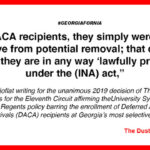
Now, I wanna talk to you about the bill. If you’ll please look at lines, uh, 91 and 92, it says that no person… “Nothing in this Code section shall be construed to require in-state tuition classification for individuals not lawfully present in Georgia.” Uh, I am a lawyer, I do appel- I used to do a lot of appellate work. Uh, I recently represented a client suing the Immigration Enforcement and Review Board. That was a fascinating experience. I wanna point out to you that we have an Eleventh Circuit Court of Appeals decision from… 2017. Uh, Estrada versus [inaudible 00:19:53], where the court specifically says, as DACA recipients, they simply were given a reprieve from potential removal. That does not mean they are any way, quote, “lawfully present,” unquote, under the Act. So these folks all talking about, “Oh, they’re lawful, they can get a driver’s license,” they’re not, they’re not lawful.

The next thing I wanna talk to you about is… uh, lines 102 through 107. Now… I know a lot of people in the legislature are not lawyers. I understand that. But when I walk into a courtroom, I have to use the rules of statutory construction. Okay? So when I read this language, it says… Okay. “An eligible unit,” blah, blah, blah, “shall give priority consideration.” I don’t see priority consideration defined anywhere in the bill, and therefore that is extremely flexible language.

Then it says, “to enrollment applications by qualified students,” blah, blah, blah, “who are classified from in-state or out-of-state tuition over applications by qualified opportunity students.” And here’s the ki- part that really kills me. “And may defer enrollment of qualified opportunity students until all timely applications by qualified students, in or out, are accepted, deferred, or rejected.” In the law, may means may. You might do it. You might not do it. There’s no mandate to do it. So this law basically says, “Our heart is in the right place, but we don’t really mean it.” So this law is basically saying that all of those out-of-staters that should get consideration first, don’t have to get consideration first. It’s that nice window dressing, but I can walk into court and I can challenge it.

The other thing is, I would be tempted to challenge it anyway, just because you have your lines 91, 92, that says it’s only for people in Georgia unlawfully. But then you go and give it to DACA people who our own- th- we’re in the Eleventh Circuit. Their decisions control, and they said they’re not here le- legally. So, you know, you guys are really kind of putting yourselves in a box.

I also wanna say I’m very happy-

Chairman Chuck Martin:

If you- if you- we’re at three minutes, if you could wind up. Thank you.

Katy Stamper:

Oh, I’m sorry. Um…

Chairman Chuck Martin:

No, it’s quite all right. I’m gonna give you the opportunity to-

Katy Stamper:

Uh…

Chairman Chuck Martin:

… complete. That’s fine.

Katy Stamper:

No, no. I think- I think that’s good enough. They made a lot of other comments that I don’t like. But the statutory construction on it… man, I’d file a l- I’d- if I had the energy, I would file a lawsuit against it as soon as it passed. Thanks.

Chairman Chuck Martin:

Yes, ma’am. Well, al- um, a- allow me to say this, because I’m not a lawyer, but it specifically says that you, nothing in this Code section shall be construed to give in-state tuition. And that’s what the words on paper say, and- and that’s what it does. This bill doesn’t gi- I mean, you- you don’t have to a- I’ll- it gives you a- at another time, I just…

Katy Stamper:

Let me make sure I understand what you said.

Chairman Chuck Martin:

Well, I mean, wh- what I’m reading, “Nothing in this Code section,” the- the- the language you brought up, “Nothing in this Code section shall be construed to require in-state tuition classification for in- individuals not lawfully present in Georgia.” So that makes it clear, black-letter law, that this bill does not give the individuals alluded to in this bill in-state tuition. Wouldn’t you agree with that?

Katy Stamper:

I [inaudible 00:23:17]

Chairman Chuck Martin:

The- I mean, th- this- this language hasn’t changed from the previous bill.

Katy Stamper:

Okay.

Chairman Chuck Martin:

I mean, I, black-letter law that says you cannot have this, there’s nothing in this Code section… gives in-state tuition to people in the country unlawfully.

Katy Stamper:

[inaudible 00:23:36]

Chairman Chuck Martin:

Okay, s- so- so the- this- this… does exactly what we said. We’re not… The- the reason I- I draw that point is there are different, um, in-state tuition classification, uh, they’re different rights and newer to that, that are not before this body today. So, purposefully, we created a different, um, tuition category so you’re giving no more, no less than you see in these six pages to these individuals. I just think it’s just- it’s- it’s very important to- to do that.

And as far as, um, the- the line [inaudible 00:24:12] “may defer…” because that’s a belt and suspenders issue, again, if the university is [inaudible 00:24:17] away people, or is in the process of turning away people, they would not be an eligible unit, so they- you would never get to this point in the law. And the reason is says “may” instead of “shall” is if you have many open spaces, and, you know, if you had 1,000 open spaces and you had 100 people in-state and 100 people out-of-state, and 100 people that are opportunity tuition, it would be ridiculous to say you shall defer them, if you knew you were still gonna have 700 empty spaces. So that’s the reason the “may” i- is in there.

Uh, uh, again, I- I would agree with you that that section may not even be necessary, because if you’re full, you’re not an eligible institution. So I’d be- I’d be happy to talk- I’m- I’m not a lawyer, but- but I’d be happy to talk to those specific situations.

That concludes our, um, our testimony as far as this. I’m gonna go back, we- we do have a couple of other bills we have to get through, we got 13 minutes. Um, we’re, obviously, as I said earlier, we’re not taking action as, Chairman Carpenter, I’m gonna go to you, I’m gonna mention one other thing that earlier in the testimony, I think you wanted to get back to. It was alluded to that, um, people from Tennessee can’t even get the same deal. Um, just to point out, and I don’t know that we have anybody at the university [inaudible 00:25:25] here to- to speak to this, but we have border waivers that are in place. I think there’s a number of people, uh, at- at- uh, from the state of Tennessee that get in-state tuition, in-state tuition through border waivers at- at many of our colleges in- in Northwest Georgia. I know at, uh, other colleges in- in South Georgia, that- that that’s available. So we can make that, uh, more available to the committee if they like.

With that, Chairman Carpenter, I’m gonna let you, um, wind up, and, uh-

Rep Kasey Carpenter, bill sponsor:

Thank you.

Chairman Chuck Martin:

… we’re gonna move on to the next [inaudible 00:25:52].

Chairman Carpenter:

Thank you, Chairman. Thank you, committee. Sorry I had to bounce out, I’m presenting another bill downstairs in a different category. Um… but I would just follow you up by listening to all that we’ve heard today… there is not a single US citizen that is planning to go to college that can’t move to Georgia and in 12 months pay in-state tuition. If they establish residency in the state of Georgia for 12 months, they can pay in-state tuition. In-state tuition.

What this bill says is that if you’ve been in the state of Georgia since 2013, you can pay an opportunity rate for these certain individuals. So, uh, we are not giving something that any US citizen couldn’t come to Georgia and in 12 months get. Even a better rate.

So the straw argument that has been on display here today is completely untrue. You read it in the paper, you get a email, I bet you got six emails in your account right now that says, “I can’t believe you’re doing it.” And I’m telling you, that’s not what this bill does. That argument does not hold water. This simply says, if you’ve been a DACA recipient since 2013, not that you’ve moved to Georgia, that you literally have been here since you’ve got your DACA, uh, which happened in 2012, 2013, if you’ve been here the whole time, if we’ve educated you, if Georgia’s all you know, then you get a chance to pay an opportunity rate in the state of Georgia.

That’s all I got.

Chairman Chuck Martin:

Um, thank you, Chairman Carpenter, you- I’ll… we got one question, I’ll allow that, and then I’m gonna ask us if we can move forward. Uh… Representative Jackson.

Representative Jackson:

Thank you, Mr. Chairman. I’ve sat here all afternoon and listened very attentively, uh, to what has been said, and I reflect back. This is a great bill for human beings. And I was sitting up here-

Chairman Chuck Martin:

Mm-hmm.

Representative Jackson:

… and I pulled a poem. And I’m not going to read it all. It’s not long. But the title of it is, “I, Too.” And it’s by Langston Hughes.

Chairman Chuck Martin:

That- that, would th- would the lady… [inaudible 00:28:06] was suspended allow me to inquire. We- we will give you an opportunity to do that at the later date, if the lady would yield back. I’m told we have a hard stop at 3:00.

Representative Jackson:

Okay.

Chairman Chuck Martin:

I have- I have- I have a gentleman that’s been waiting for, uh, patiently for two hours, and I don’t wanna look at him in a minute and tell him we have to leave.

Representative Jackson:

(laughs)

Chairman Chuck Martin:

Uh, but one of- one of your, one of your-

Representative Jackson:

Thank you.

Chairman Chuck Martin:

… uh, caucus members on- on the Democratic side (laughs).

Representative Jackson:

(laughs)

Chairman Chuck Martin:

So I- I, uh, if you would, I- I’m sure the lady would- would- uh, uh, but if you would mind-

Representative Jackson:

I yield.

Chairman Chuck Martin:

… [inaudible 00:28:33] that, an- and, thank you.

Representative Jackson:

I yield, but I would like to come back.

Chairman Chuck Martin:

Yes, ma’am. We- we-

Representative Jackson:

Thank you.

Chairman Chuck Martin:

I promise you we will do that.

Um, so, what I’m- what I’m gonna do at this point is, uh, we’re gonna- we’re gonna complete, uh, testimony here. I- I wanna say there- there should’ve been a- a notice that had gone out. We will meet again tomorrow, uh, ladies and gentlemen, at, uh, two to four, the meeting notice you got. I wanna be clear, because there’s a, there’s piqued interest in this, um, we will not have, uh, House Bill 131, uh, on the agenda tomorrow. That will not be put on the agenda, uh, tomorrow. We have those items we talked about earlier today, 185, and- and 130 that we’ll- we’ll-

END.

Audio

https://newdustininmansociety.org/wp-content/uploads/2023/02/HB131-Hearing-Feb-22-2023_2of2-1.m4a https://newdustininmansociety.org/wp-content/uploads/2023/02/HB131-Hearing-Feb-22-2023_2of2.m4a

Filed Under: Older Entires

Partial transcript House Public Safety Committee HB 136, Feb 16, 2023 See also HB 1105

February 19, 2023 By D.A. King

Transcript by Rev.com

My cost: $76.00 and about two hours, not counting the day in the Capitol.


Rep Jesse Petrea:

… a federal government to control illegal immigration affects the people we represent. And it affects their public safety sometimes. And we do have the ability to do this. We do have the ability to inform the citizens of this state of the degree to which criminal illegals in our state impacts their public safety. And so this bill is about just that. Do we want to make sure that without having to somehow, uh, submit a Freedom of Information Act, and try to discover how, how, how big this issue is from the department, do we wanna require the department to regularly, on a quarterly basis, simply post the aggregated data, no specifics, aggregated data on the degree to which this issue is a problem in this state?

So I’m gonna ask you now to look at, if all of you would look at this list of ICE detainers I gave you. So this is an example, it gives you a picture, basically, of what I want. There’s nobody’s name, there’s nothing. Now, as I said in the subcommittee, if you want specifics, you can look at every inmate in the system online. You can go and get their name, everything, where are they from, where com- they committed a crime, what they did. It’s not what I want. What I want is the people to have a snapshot of the problem or the lack of a problem. ‘Cause some people will tell you, you probably got some folks in this room that’ll tell you, “This isn’t a problem at all.” That’s okay. That’s their right. It’s not my job to interpret whether it’s a problem or not for others. I see this as my job to let you determine the degree of the problem so you can make your own decision about whether it’s a problem.

But I want you to look at this list, and I want you to see this aggregated format, and so when you look at this real simply, I want you to note here that there are, there are today, okay? And again, you may think, “Ah, it’s a low number.” You may think that’s a, a, a … an appalling number. I don’t know. But there are 230 child molesters who came to this country illegally, today, in Georgia, who molested children. Okay. There are, today, in our correctional system, 176 murders in our state correctional system. Okay? Who came to this country illegally first, that’s one thing, and then they subsequently committed a murder in the state of Georgia on the people we represent. Okay?

Keep going down the list. There’s 157 people who came to this country illegally, today, in the Georgia correctional system, who then subsequently raped someone, one of our constituents, in the state of Georgia and is now in our correctional system. Now, you may not be interested in knowing any of that, or caring. You may not believe that that was, as I call it, an avoidable crime. Maybe you don’t think that was an avoidable crime. I believe it was. And so I want this information to be made available to our people.

So I wanna make one thing clear, though, about this list, as I alluded to earlier. As you look at this list of 1,505, and I’m gonna give you an update on this, ’cause I want you to note at the top, this is December of this year. December, I mean, of 2022, December. But I want you to note something. My friends, this is not a list of all the criminal illegals in our Georgia correctional system. It is a list of those with ICE detainers. So let me explain now the conundrum, there. Why do I point that out?

I point that out because of this. I just want you to hear me. This is facts. In 2019, ICE issued 165,000 detainers in the United States. Okay? In 2022, ICE issued 78,000 detainers in the United States. ICE detainers have plummeted under the Biden administration. And in spite of the huge increases that everyone in this country, of every party, recognizes [inaudible 00:04:33] the last few years, there has been a 55% decrease in the number of detainers issued since 2019.

So, why do I tell you that? Because if you only have a list of ICE detainers, you don’t really have an accurate picture of what I’m trying to get at. What I’m trying to get at is how many illegal criminals are in this syste- uh, yeah, people illegally here are in our correctional system? If you only have ICE detainers, you have a subset of that. Now, because I can’t get that number from the department, I don’t know whether this is the … I, I hope this is the majority. But we don’t really know that. Okay? Because as you heard from the numbers I just mentioned, today, many people in the syst- the, the, the Feds are simply not issuing detainers on everyone. I hope that, I hope that makes sense.

So, uh, Mr. Chairman, there’s one last thing I’d like to mention, because there was a good question, uh, where is Representative Neal? She’s not here. She had some good questions. And I wanna mention this. Uh, today’s data, and when I say today, let me be clear again, I wanna be precise in everything I say, yesterday, (laughs) yesterday’s data, there were f- You see 1,505 here, of ICE detainers. There are now 1,532 today, yesterday. And to m- To Representative Neal’s very good gr- uh, question, eight of those are duplicated on this list. She asked about this list.

So there are eight. So there are really 1,524 on yesterday, criminal illegals in the Georgia correctional system with ICE detainers. I hope that’s clear. So there are eight duplications. So by and large, when you look at this list, yes, you’re looking at individuals. But there are occasionally a situ- eight times out of these 1,505, there is a duplication.

Okay. So there’s one last thing I’ll say beyond that, Mr. Chairman, that is this. This relates only to the Department of Corrections. Okay? So this has nothing to do with jails, your municipal or county jails, sheriffs, all of those things, that’s another matter. This is the issue that … This is an issue I think’s perfectly appropriate for us to address, ’cause this is our state correctional system. And the question at the end of the day is should the people, do the people have a right to know the degree to which this is, uh, affecting their public safety or not? That’s up to all of us to decide. Thank you, Mr. Chairman. I’m glad to answer any questions you might have.

Chairman Collins

I’ve got a couple of questions for you, there- [inaudible 00:07:21]

Rep Jesse Petrea:

Yes sir.

Chairman Collins

So, we know there’s 15, 1,500 illegal aliens in this state that are on ICE detainers.

Rep Jesse Petrea:

Yes sir.

Chairman Collins:

But we do not know how many illegal aliens that we have in our prison system, total. We do not know that.

Rep Jesse Petrea:

Hm. Chairman, we do not.

Chairman Collins

We do not know that. Now, we don’t know that. Somebody-

Rep Jesse Petrea:

That doesn’t mean we don’t know that.

Chairman Collins

Somebody probably knows that.

Rep Jesse Petrea:

I don’t know that.

Chairman Collins

But they’re not sharing that information with us.

Rep Jesse Petrea:

My understanding, and the department is welcome to speak, my understanding from talking to probably the most knowledgeable guy I’ve ever spoken to on this issue, Mr. John Feere, who is a chief of staff to Tom Homan the director of ICE, and two other directors, is that this information is all available, when our, our correctional system uses a, a, a … has a memorandum of agreement with a, a program called 287(g). So when you … You, you know, and you know, I’m not in the system, so I’ll, I explain it the best way I can. When you admit someone you … that … You are communicating with ICE to determine their status. Okay? Whether they’re here illegally or not.

My understanding from ICE is that they, they are going to know who is here illegally or not. Now, I can’t tell you what the department’s gonna say, ’cause we’ve been kinda round and round on that. But here’s the deal. They tell me, “You’re gonna know.” Now, that doesn’t mean they’re not all gonna have an ICE detainer, because again, you’re only gonna have a detainer if the Feds choose to pursue that individual, and for a myriad of reasons, as I discovered from talking to Mr. Feere] and others, they don’t always do that. And they particularly haven’t done that in the last couple of years. Because what the Biden demonstration has done, has decided that, “Well, we’re only interested in priority cases.” So you’re not gonna capture the totality of the problem. So, Mr. Chairman, now, this is a long answer to your question, but I don’t know the total number. But I will promise you this. It is more than the list of ICE detainers.

Chairman Collins

Okay.

Rep Jesse Petrea:

I cannot tell you the degree to which it is more than that. Thank you, Mr. Chairman.

Chairman Collins

Any questions for the author, for the bill, before we hear from anybody from DOC? Any questions? All right.

Rep Jesse Petrea:

Representative Evans?

Speaker 2:

Thank you.

Rep Becky Evans:

Thank you. Um, so just to be clear, for the, for the purpose of the bill, this … How does, how does this improve our public safety if we have this bill?

Rep Jesse Petrea:

That’s a good question. I tried to answer it in the subcommittee as well, and I’ll do it again, uh, Representative, so here’s the deal. Uh, I believe that, uh, the people should know. You know, we’re dealing with a multitude of issues today. We’re talking about, um, some challenges we have with district attorneys, a multitude of things that relate to our public safety. Um, but in order to, to understand the problem in the realm of public safety, we s- we, we need to know where the problem is. Now, we all know that the, that, that overwhelmingly, because of the overwhelming difference in population, that our home- Listen. We got enough home-grown criminals to keep us busy, don’t we? We cer- We certainly do.

But the degree to which, if, if someone is interested in whether or not this country is, uh, and their … and the lack of following our immigration laws is impacting our lives, um, I believe the people have a right to know that. So I believe that offering information is beneficial to society. That’s, that’s me, personally. Now, there are folks … So the mantra, generally, is this. Uh, beca- And I will tell you, the first thing I wanna say is the overwhelming majority of, uh, not only immigrants, but even illegal immigrants in this country, uh, are, are, are, are, are good people. They’re good people.

That doesn’t change what I said earlier. The majority of cri- the majority of society are good people. But every criminal alien in this country who then commits a crime on our people was an avoidable crime. Okay? And so I believe educating people on the degree to which is this is a problem, helps them to make a more informed decision about whether they care about the issue of illegal r- immigration or not. That’s the best I can answer that. Okay?

Rep Becky Evans:

Chairman? May I- [inaudible 00:11:56]

Rep Jesse Petrea:

It’s a matter if do they need-

Speaker 2:

Go ahead.

Rep Jesse Petrea:

… to see it or not.

Rep Becky Evans:

Okay.

Speaker 2:

Go ahead.

Rep Becky Evans:

Yeah. So, I know you … You know, it’s a good point, you wanna talk about what the problem is. But I, I … One of my, uh, fears about this, this type of bill is that, um, we have, you know, a … We have had a rise in, in, you know, hate, uh, you know, hate crimes, you know, across our country. And we had this incident, you know, in El Paso, um, where a gentleman came in and shot a bunch of, you know, Hispanic people, because of this, you know, huge criminal, illegal, uh, invasion coming across our border. And, um, I’m concerned about the impact of, uh, of, of this contributing to anti immigrant, um, sentiment.

Rep Jesse Petrea:

Uh, Representative, I appreciate your comment, but I, I have a hard time fathoming that. I mean, what, what we’re doing is simply saying that the data that is specifically already in … Uh, we’re aggregating the data to show the breadth of a problem that has nothing … I m- I mentioned to the subcommittee the other day, and this is, this isn’t any … You know, there’s this tendency. Actually, it’s an, it’s an, uh, it, it’s routine and it’s done on purpose, to kinda pigeonhole this as relating to one group. There’s 100 … There’s 1,505, here. 150 of ’em, I was looking around the webs- 150 of ’em are Germans.

So we have a problem in this country, uh, by the way, the immigration problem, uh, a huge proportion of it is overstayed visas. These aren’t people com- crossing a border. This … There, there’s an issue. It doesn’t matter where you’re from. The issue is are people criminally here? And then, they commit crimes on our country. And quite frankly, here’s what’s happening. Many of those individuals who are criminally he- or illegally here in the first place, then commit a crime, often violent or sexual, like these, are never even deported after they serve their time. They’re not even deported.

Speaker 2:

Repeat that-

Rep Jesse Petrea:

And the answers-

Speaker 2:

… one … Repeat that more time.

Rep Jesse Petrea:

Not everyone is deported after serving, uh, their cri- their time in this country for a crime against our constituents. They aren’t all deported. By virtue of the fact that I just told you, they don’t all of ICE detainers.

Speaker 2:

Right.

Rep Jesse Petrea:

They are not deported. But, uh, but every, every common sensical person I represent would say, “Listen. You’re breaking the law getting here and then you assault our people? You attack our people? You commit crimes against our people?” Surely we could all agree that those individuals should be removed. That’s not the case. So-

Speaker 2:

Yeah.

Rep Jesse Petrea:

Listen. Uh, uh, I, I … You know, I don’t wanna get in too big of a debate on that, but that’s the reason I believe the people have a right. Now, the question is do people have a right to know the degree of this problem or not?

Speaker 2:

Well- [inaudible 00:14:34]

Rep Jesse Petrea:

Well, listen, the mantra is often, uh, that these people who are mostly good people, that are maybe here illegally, I will tell you, overwhelmingly, good, hard-working people who don’t like, who don’t … who, who oftentimes are the victims of these crimes.

Speaker 2:

Absolutely.

Rep Jesse Petrea:

Let me be clear. And I’ve talked to a multitude of people, le- legal immigrants here, who are 100% behind me.


Speaker 2:

Number 16.

Rep Jesse Petrea:

Now let me … Mr. Chairman, could I say one more thing?

Speaker 2:

Please.

Rep Jesse Petrea:

The mantra from the other side, which has an agenda, is that the only crimes these folks commit are speeding tickets and parking tickets, that’s it. They’re just parking tickets, speed ti- You’re gonna deport people for parking tickets, speeding tickets. There ain’t nobody deporting somebody over parking tickets, speeding tickets. My friends, there’s no speeding tickets on here. There’s no, there’s, there’s, that’s, that’s … It’s simply not true. Okay? [inaudible 00:15:23]-

Speaker 2:

Representative Frazier, you had a question?

Speaker 4:

[inaudible 00:15:25] a conversation.

Speaker 2:

Oh.

Speaker 4:

Please- [inaudible 00:15:28]

Speaker 2:

Who’s number 16 down there? Mi- Representative Cummings, I’m sorry. I was [inaudible 00:15:35] Representative Frazier was there.

Rep Terry Cummings:

Good morning.

Rep Jesse Petrea:

Good morning.

Rep Terry Cummings:

Um, it’s my understanding that a lotta times, um, undocumented immigrants do not report crimes, for fear of being taken in and deported. How do you feel that this bill will further kind of, um, increase that?

Rep Jesse Petrea:

Well, I’d, I, I … So this relates only to those already in the criminal justice system, in our prisons, so I don’t understand how it could impact that at all.

Rep Terry Cummings:

Because you’re still gonna have-

Rep Jesse Petrea:

You-

Rep Terry Cummings:

… more arrests.

Rep Jesse Petrea:

Say again?

Rep Terry Cummings:

You’re still … You’re talking about people currently.

Speaker 2:

Yeah.

Rep Terry Cummings:

But there are people coming into the system every day. So the numbers change. That’s why you had the 15 or five change was only ’cause more are coming to the system.

Rep Jesse Petrea:

Look, but Representative, my point is that what happens in the, in the community with your, uh, with your law enforcement in the community, has nothing to do with this. This bill is only … So, so to be clear, this bill doesn’t affect anyth- anyone, uh, or anything unless they’re already admitted into the state prison system, not even on a local level. But once they’re there, there is a re- There is an agreement, where we discover, “Okay, inmate number 22 is now admitted.” We discover whether they’re here illegally or not.

And all this does is every 90 days, aggregate the data of the totality of those numbers, uh, for the transparency, for people to understand, that agreed to which it either is, or in their mind, isn’t a problem. So I d- I … Uh, uh, I’m I respect your question, but I, I don’t understand how it could fact- affect them, anyway. ‘Cause all it does is educate (laughs) people on those that are already in the correctional system.

Rep Terry Cummings:

I tend to s-

Rep Jesse Petrea:

Not that it does, doesn’t deal with the community in any way, shape, or form.

Rep Terry Cummings:

I tend to see things, sometimes, as unintended consequences, and that’s what my concern is with, with this. The other concern is, um, you said that you wanted countries identified, so if you find out that a specific number or a large number are coming from one particular country, what would the resolution be to that?

Rep Jesse Petrea:

Well, there is no res- Again, there’s no resolution. This is, this is providing data to the people. Now, you can go on … so, t- to be clear, you can … So on the website today, you can go to the Department of Corrections, and if you wanna spend a lot of time searching around, there’s a … You can click on foreign inmates. And you can see the self-reported home countries of all these inma- And you can see. You can see so much more than I’m interested in. (laughs) You can see their name, w- where they came from, what they did, when they did it. You can see everything about ’em. I, I’m not interested in all that. So, w-

Robert:

But the answer to your question is this, let’s say that, let’s say that you look and you see there’s, ah, you know, 105 [inaudible 00:00:12], 150 from Germany. Those are obviously over-stayed visas. And you see a multitude of others. It tells you… You might see, y- you might see a list of those that are on terrorist watch lists of nations. I don’t know. I don’t know. But there’s a… W- Why would we not want the totality of that information to be shared, as long as it’s aggregated? It’s not specific.

Chair:

Hold on, hold on one moment, please.

Rep Sainz:

But that’s my question. I’m sorry, Chairman. I’m-

Chair:

President [inaudible 00:00:37], you had a question?

Speaker 3:

A couple of quick ones. Um, would you not agree that it’s in, in mentioning unintended consequences, would you not agree, uh, um, that this, your bill addresses the unintended consequences of our, uh, lapsed, uh, enforcement of illegal immigration? This is an unintended consequence?

Robert:

Yes, sir, I would agree wholeheartedly.

Speaker 3:

And in relation to my colleagues mentioning of anti-immigrant behavior, would you not agree that you have faith in your constituencies, and the constituencies of, of the members here that the, that our citizens who are looking at this information can distinctify the difference between those who violate our laws, not once, but twice, by first coming into this country illegally, and then second, violating in a dangerous fashion and creating victims in our nation. And legal immigrants like, for example, my own mother, who I can attest is a wonderful lady and a legal immigrant, who.. Do you think that that separation is clear to the, to our constituencies

Robert:

I think it is representative, and indeed, I met your mother and a lovely lady she is.

Speaker 3:

Appreciate it.

Chair:

Number 10, we got down there.

Speaker 4:

[inaudible 00:01:42].

Chair:

Representative, go ahead.

Speaker 4:

Yes, sir. Yeah, I just want to thank you for bringing this bill. Ah, you know, the information that you’re communicating to the American public is very valuable information that, at the end of the day, you know, we, we should have as an informed… I mean, we should do everything we can to inform the public about all the various issues that, that face our country so that they can make intelligent decisions about how they want their, their leaders to, ah, to run their country. So I appreciate this and, and the information and, and what this bill does.

Chair:

We’ve got 10 members that are going to be speak… Two, two folks out there in the audience that want to speak and give some testimony.

Speaker 4:

Yes, sir.

Chair:

Ms. Stamps. I’m sorry?

Ms. STamper:

Stamper.

Chair:

Stamper, I’m sorry. Ms. Stamper, if you want to go to the podium.

Speaker 4:

Mr. Chairman, I’m going to take my seat back over here, thank you.

Ms. STamper:

How long do I have to speak?

Chair:

I think brevity’s going to be your friend here, because we have another bill.

Ms. STamper:

Okay, great. Hi, my name is Katy Stamper and I’m a lawyer. I live in Woodstock. I only work part-time, so don’t call me for any business, okay? Um, I’ve come here to speak about this bill because I’m very troubled that I even have to come down here and talk about it. We don’t want our country to turn into another country. So as the author of the bill said, this gives us information to know how bad the problem is. And we’re entitled to have that information.

And when you talk about the shooting in El Paso, we have a right to be angry at illegal aliens. We have a right to be angry at our federal government for not enforcing our border. We have a right to be upset that illegal aliens go into our hospitals and get free dialysis twice a week. We have a right to be, to object to that.

I don’t like the idea that this would eve be a question. There should be a presumption that we are given this knowledge. It should be a rubber stamp. Because if I don’t do something that y’all want me to do, I get in trouble and I get harassed about it. Why would illegal aliens be treated any differently? Why would we want.. Why would we not want to know? Why is our Governor Kemp, who campaigned on getting his truck, why is nobody doing anything about deporting these people?

So I would like to know why you don’t contact our Senators and say to them, “Why aren’t you pressuring President Bilen, Biden and Mayorkas to enforce the border, instead of worrying about prejudice against illegal aliens?”

Chair:

Ma’am, if you wold, if you have another comment about the bill, that’s fine. You can speak about the bill, but we’re not going to direct specific comments.

Ms. STamper:

Well, I’m sorry-

Chair:

And I think we all, we all have a reason to be mad when someone goes in and kills innocent people. I, I don’t appreciate your comments there.

Ms. STamper:

What do you mean?

Chair:

When you were specifying that direct from there.

Ms. STamper:

I’m-

Chair:

When you were directing your comments about we should be angry. We should not necessarily be angry. We should be concerned, but I, I don’t think we want to make light of the situation where innocent people were killed.

Ms. STamper:

I’m not making light of anything.

Chair:

Well, I, I take your-

Ms. STamper:

I’m not making light of anything. What this committee-

Chair:

I think your time-

Ms. STamper:

… is doing.

Chair:

I think your time speaking is over with and you have, you have made it very clear that you support this bill, and I appreciate your comments. If you’ll please take your seat.

Ms. STamper:

Sure.

Chair:

We’ll move on. Thank you.

Speaker 6:

[inaudible 00:05:10], Mr. Chairman.

Chair:

The next person we have is, ah, Mr. D.A. Keen.

D.A. King:

Thank you, Mr. Chairman. Members of the committee, my name is D.A. King. I use my initials because my mom named me Donald Arthur King and I’m afraid somebody would confuse me with the other Don King, so. If I live until April, I’ll be 71 years old. I started coming to this campus in tw-… in 2004 to educate legislators on illegal immigration. And we passed a lot of laws I helped draft, I helped pass, I’ve held rallies. I’ve urged, pleaded, debated and pushed. We have a lot of laws on the books here in Georgia aimed at illegal immigration.

I came today to thank State Representative Jesse Petrea, who is a very dear friend of mine, for introducing this bill. I’m here to support the bill. I run a nonprofit called the Dustin Inman Society. The Dustin Inman Society is named after a Woodstock youth who is forever 16 years old because we do not enforce our immigration laws.

At the minium, I hope this bill passes as it is so that we can at least have a look into the price, the cost, not just the human cost, but the monetary cost of the criminal aliens that are in the state prison system. I can’t imagine, I can’t imagine the upside to not passing this bill as is. Further, I can’t imagine anybody who would try to downgrade it to include only detainers.

As State Representative Jesse Petrea has said, that is a very small portion of the total illegal aliens in the prison system. Uh, Representative Petrea quoted a very dear friend of mine who I’d known for a long time on, on, wh- who worked for ICE. He is exactly right and I’m going to get done in a minute, but I want to say this to all the legislators here. Representative Petrea has learned a lot because he did his research on illegal immigration in a state where, folks, we have more illegal aliens in Georgia than they have in Arizona.

We have more illegal aliens in Georgia than we have Green Card holders. I admire and thank Representative Petrea from here and sincerely, while I look everybody in the eye on this panel, if you will spend the amount of time and show the interest in illegal immigration that Representative Petrea has, I will come to your house and I will wash your car.

It’s very, very important that this bill passes. I hope you’ll pass it out today. I can stand here and speak forever, but it’s a good bill. It’s worthy of your vote and if we don’t pass it, people are going to be asking a lot of questions about why not. I am more than happy to take any questions.

Chair:

Okay. Ah, thank you.

D.A. King:

Thank you, Mr. Chair.

Chair:

Any questions? I don’t think there’s any questions at this time. We have someone from the Department of Corrections that would, uh, be, be having testimony [inaudible 00:08:36] after this, before we, we [inaudible 00:08:37] the question on this?

Rob Thrower:

Yeah, I’ll be brief, Mr. Chairman. Um, first I just want to thank Chairman Petrea, ah, for his willingness to work together and for being transparent and honest with us of the direction of the bill. Ah, secondly, anything I say here today, I don’t want it to have any intention of us undermining, uh, our partnership with ICE and the 287 G Agreement.

The folks who work with ICE do a great job and we’re going to continue to work with ICE on the 287 G Agreement. Um, at this juncture between the department and the current version of the bill, there just is a disagreement about the language as it stands. Um, there’s a substitute out there that, ah, would accomplish what the department sees as what it can get its hands on, right now and publish.

And, you know, my intent today is not to be adversarial in any, way, shape or form. I’m just a mutual fact finder on some of the questions that you may have. So if there’s no questions, I’ll take my seat.

Chair:

Good, that’s fine. Number 19, you have a question? Do you have-

Rep Bill Werkheiser:

In relation to what you mentioned, what in, what in the bill would you need changing in order to be in support? You said there was a substitute version, ob- obviously not in front of us. So what it, what areas, ah, is the issue it was, I guess.

Chair:

The substitute is not in front of us. The bill that is presented was the bill that was presented in, in a subcommittee, as alluded by the author earlier in his comments. So if you want to answer that question about what it was the department preferred to be in the sub?

Robert:

Yes, sir. I apologize-

Chair:

We’re all friends here, we’re going to be friends after this is over with. Most of us, all of us sitting up here will be. But you feel free to answer that question.

Rob Thrower DOC liaison:

No, and, and I’ll clear that up. There was no substitute introduced. There’s a substitute that we were working on, so I’ll, I’ll clear that up. Apologies there. Ah, the piece about immigration status, um, felt that the might tie the department’s hands in what exactly we’re looking for with immigration status. Ah, the piece that we could… and there was a earlier version of this bill back in 2019, House Bill 202, that we had kind of narrowed down to publishing the information that we currently give, which is the number of ICE detainers broken down by crime.

Ah, the list that I think you have in front of you that we share with, ah, Chairman Petrea from time to time, ah, that is the quantifiable information that we can grab, or we can put our hands on immediately. And we can put it on our website without a bill or with the bill, but that’s what we can concretely put our hands on.

So, the immigration status was a bit confusing about what the intention was, and what we have, and what, how we could make that work.

Chair:

Thank you. One question I do have for you Rob, if you don’t mind, what’s it cost to house someone in our prison system?

Rob Thrower:

$73 a day.

Chair:

$73 a day. Okay. Wow. Do we have any more questions for the department? Number 29 over here. [inaudible 00:11:55].

Rep Bill Werkhieser:

Thank you, Chairman. Is there no reason that we could not, um, consider substitute, since the department that we’re asking to do this is saying they cannot even do the current version of the bill?

Speaker 12:

Mr Chairman, you have the ability to, to-

Speaker 13:

I would like to make a motion that we accept, ah, substitute-

Chair:

We’re, we’re not ready to do, to do that yet. But at the appropriate time, the Chair will be more than, ah, pleased to, ah, intro-… to recognize you. Number 26, that’s Chairman Petrea.

Rep Jesse Petrea:

Mr. Chairman, to be clear, ah, Chairman Werkeizer just misspoke. He just said that the department cannot do this. That is inaccurate. Ah, Mr. Thrower did not say they cannot do it. You’ve heard him allude to the fact that, I think you said, I’m not going to put words in your mouth, and by the way, this young man has been enormously helpful to me. The department has been extremely helpful in every way.

What he said was, “It’s easy to get today.” Remember, we’ve got a little bit of a disconnect here between what I’m hearing from ICE, but this information… So I want you to contemplate something. Contemplate that someone has been arrested in the community, been found to be guilty. They’ve gone through all their… They’re not in our state prison system. They’re not in a county jail. They’re in our state prison system. And then I want you to imagine that we honestly don’t even know whether they’re here illegally or not.

Isn’t that hard to understand? It would seem that we would know that. And of course, we have 287 G. So I don’t think that now, so I’m going to ask Rob, to answer the question. Is it that you cannot do it, or that it is easier to do it with only ICE detainers which would be a subset of those that are in the system?

Rob Thrower DOC:

The ICE detainer information is, like I said, what we can put our hands on. The immigration status piece starts, you know, in my opinion getting into, um, did somebody walk over the border illegally? Did somebody have an education visa that’s expired? Did somebody have a work visa that’s expired, or [inaudible 00:14:06] has ICE identified somebody that’s, um, in violation of some form of immigration law that’s given them probably cause to put a detainer on.

And so, I.. We don’t have that information. When they send the detainer to us, they just say, “We have probably cause that this individual, ah, rises to the level of putting a detainer on them, and, you know, we’ve got the process of putting it in their file and contacting them after the sentence has expired.”

 So that’s where I was going with the, ah, information that we have and what we can provide.

Rep Jesse Petrea:

Is that, is that clear to everybody? I’m still trying to process that, but let me come back to you in just a sec. Number 20 down there, is that-

Speaker 16:

Yeah, and mine’s following on the exact same thing we’re all talking about now, is, ah, is your inability to provide the information, or a, again it, it-… This bill would require that, so if, if it was a requirement, could that information then be obtained because there was a reason to, and there’s no reason to get it now? Is that, is that what it amounts to?

Rob Thrower:

Well again, I don’t want to speak for what we can and can’t do under our 287 G Agreement. Um, you know, the information that is requested upon us when we get the email that says, “Can you provide the information of the number of detainers broken down by crime?” I can get you the number of detainers that we have on file in the system currently today. Um, the other stuff, I, I can break it own by crime, I can give you total numbers, but the other stuff is stuff that I just can’t put my hands on concretely to turn back over-

Rep Jesse Petrea:

So would the federal government, you think they would not give that to you if you asked for it?

Robert:

It would probably have to be, and, and I’m just, I, I don’t sit on our 287 G steering committee. But what it’d probably have to be is some kind of an agreement to our current 287 G MOA.

Rep Jesse Petrea:

But that could be done, right?

Robert:

[inaudible 00:16:13].

Rep Jesse Petrea:

We could make that agreement?

Robert:

Yeah, I’m not saying it couldn’t be done.

Rep Jesse Petrea:

Okay.

Chair:

Good, all right. Ah, we’re going to-

Speaker 17:

Mr. Chairman-

Chair:

No, sir,

Speaker 17:

[inaudible 00:16:21].

Chair:

No, sir, no sir. You got to sit down. You got a order. You got a order. All right, let’s see. I think there’s number 29 down there. Yes, sir. [inaudible 00:16:29], please.

Speaker 19:

Thank you, Mr. Chairman. I’m just trying to clarify your statement. So you’re saying the State of Georgia Department of Corrections does not ne-… know for sure who’s an illegal immigrant in our prison system today?

Robert:

What I’m saying is that we know who ICE has identified somebody with probably cause to put a detainer on. I don’t know the status or what the reasoning behind the probably cause that they have to put a detainer on him. But I just know they have a detainer. I don’t know the reasons why, for why a detainer’s been placed on an individual.

Chair:

Okay, all right. Let’s see here. All right, no further, no further questions at this time. We have talked about this bill in subcommittee, and we talked about this bill here today. And I know that members of the committee share, share the concerns, ah, that I do and some don’t. Ah, and now that it’s time, ah, we move forward, what would be the desire and the will of this committee, ah, in reference to House Bill 136? Motion made, duly passed? Second? All those in favor, please say aye?

Room:

Aye.

Chair:

All those opposed?

Room:

No.

Chair:

Okay, we’re going to move for division. All those, ah, aye, please raise your right hand for yes. 11, [inaudible 00:17:53] 11.

All those opposed, same sign. One, two, three, four, [inaudible 00:18:01]. The bill passes with a vote of 11 to support it and four against. Thank you all for attending today. We have one more bill. For those of you who would like to, ah, be dismissed, you can be…


Filed Under: Older Entires

  • « Previous Page
  • 1
  • …
  • 3
  • 4
  • 5
  • 6
  • 7
  • …
  • 12
  • Next Page »

AMNESTY

Barbara Jordan on illegal immigration – Audio from CIS.org ‘Who Was Barbara Jordan and Why Does Her Work Still Matter Today?’

“ILLEGAL ALIEN”

Image: Dreamstime.com

Know the media

Immigration amnesty education

MEDIA WATCH

BIRTHRIGHT CITIZENSHIP

BLACK LIVES MATTER * ANTI-ENFORCEMENT

May Day rally in San Francisco, CA, 2017. CREDIT: Pax Ahimsa Gethen (CC).

The Illegal Alien Lobby

THE ILLEGAL ALIEN LOBBY

11th Circuit Appellate Court: DACA: NO LAWFUL PRESENCE, NO LEGAL STATUS

Image: Wikipedia

The Dustin Inman Society Blog

D.A. King, 1 April 1952 – 5 March 2025

March 23, 2025 By Fred

We are sorry to inform you that D.A. King, President and founder of the Dustin Inman Society, has left us.

Donald (“D.A.”) Arthur King, 1 April 1952 – 5 March 2025.

D.A. King left this life and his work for the nation that he loved, confident that he has done his best. D.A. passed on peacefully after a private battle with cancer.

“Once a Marine, always a Marine” – D.A. was always visibly proud of his service and his honorable discharge from the U.S. Marine Corps (1970-1976).

D.A. described himself as “pro-enforcement” on immigration and borders, an issue on which he dedicated the last 21 years of his life as an expert activist, writer and public speaker.


D.A. King talks amnesty, “hate” and “immigrants” with Jorge Ramos on Univision

https://youtu.be/w6FPMn0h4fk

Illegal immigration is not healthy for Americans

Brian Kemp’s first TV campaign ad, 2018

https://youtu.be/Gx7TsHCH35w

Dustin Inman Society page A-1, New York Times

Photo: New York Times/Twitter

Feb. 21, 2023 National Press Club Panel: OVERRUN – “The Greatest Border Crisis in History” From the Center for Immigration Studies

https://youtu.be/seND4qGrvxY

John Stossell: The Southern Poverty Law Center is a scam

https://youtu.be/k41PI54ExFc

The Great Terry Anderson (RIP) on illegal immigration in Los Angeles. – 2009

https://www.youtube.com/watch?v=dUEl8WYDDus

Terry Anderson video, part 2 – Birthright Citizenship

https://www.youtube.com/watch?v=6SS-5u8CMB4

RECENT BLOG ENTRIES

Open records request to TCSG Dec 2, 2024 – “We anticipate having the documents you are requesting to you no later than Friday the 13th of December. “- “At this time, the requested records do not exist.”

Welcoming Illegal immigration to Georgia with special treatment on college tuition

Retraction demand letter to Atlanta Journal Constitution newspaper (updated, Nov. 2, 5:55 AM)

Media request sent to Technical College System of Georgia – OCGA 50-36-1 – Employers in Apprenticeship program — Updated with response

Open records request of Sept. 24, 2024 to TCSG, Re: HDAP, employer docs and response OCGA 50-36-1 – SB 497

COBB COUNTY SHERIFF CRAIG OWENS IS A DANGEROUS MAN

The AJC was the ‘Dinner Chair’ for the 2004 Atlanta MALDEF fundraiser

Response from Senior Admissions Counselor at the College of Coastal Georgia to inquiry regarding Dual Enrollment, illegal aliens and no-cost classes

Open records request sent to TCSG on July 8, 2024 Re: Compliance with new language added to OCGA 56-36-1 in 2024 SB 497

Media request sent to the Technical College System of Georgia (TCSG) Re: Comment on the Addition of “Apprenticeships” to list of public benefits, OCGA 50-36-1 *Updated with reply

Open Records request sent to the Cobb County Sheriff’s office 4:56 AM, Thursday, June 6, 2024. 287(g) – Updated with response(s)

Biden violates federal law to give millions of migrants work permits

The Dustin Inman Society on the CIS podcast with Jessica Vaughan: HB 1105 and SB 354 – “Enforcement works!”

Why Are the Charities Enabling Illegal Immigration Still Tax-Exempt?

Tyler O’Neil: SPLC Fought Reforms That Might Have Helped Prevent Laken Riley’s Death, Immigration Activist Says

GALEO Inc. donors include the SPLC – $100,000

D.A. King in The Federalist this week: Laken Hope Riley’s Murder Outs Georgia As Largely A Sanctuary State

We remember: Candidate Brian Kemp’s 1st TV campaign ad, 2018 GOP Primary “Conservative candidate Brian Kemp will …enforce the ban on sanctuary cities.”

Illegal Immigration in GA: Dustin Inman Society Statewide Poll of Georgia GOP primary voters – Conducted by Landmark Communications Feb 13-15, 2024

It’s not 1859 – Let’s raise the pay for farmworkers who are here legally

Unaccompanied Alien Children (UACs) released into GA, 2020-2023 – data from U.S. Dept. of Health and Human Services

The SPLC is funding “Latinx” groups to advance foreign language voting

‘Terrorist Entry Through the Southwest Border’ – audio interview with expert Todd Bensman of CIS

Open records request GADOL (#3) – Affidavits/EADs *Updated

List of media members to whom we sent a “news tip” on GA Gov. Brian Kemp ignoring Dem sheriff’s open violation of state law, OCGA 42-4-14

Dustin Inman Society featured in Breitbart story: “For example, King is now trying to get the GOP governor of Georgia, Brian Kemp, to enforce a Georgia law that requires sheriffs to report jailed illegals to the federal government”

We have serious compliance problems in Georgia OCGA 42-4-14

Illegal alien captured in Gwinnett County, GA, detected by 287(g): Aggravated child molestation by sodomy, from ICE report


OLDER ENTRIES


REMEMBERING BARBARA JORDAN ON IMMIGRATION

Barbara Jordan. (Biography.com) "Those who should get in, get in; those who should be kept out, are kept out; and those who should not be here will be required to leave." - Testimony of the late Barbara Jordan, Chair, U.S. Commission on Immigration Reform on February 24, 1995.

ORIGINAL WEBSITE

The Dustin Inman Society Logo

Video

ACCUSED KILLER OF DUSTIN INMAN WILL NOT BE RETURNED TO THE U.S.

Associated Press: “Some illegal immigrants can get Georgia driver’s licenses”

Georgia drivers license issued to non-citizens. Photo DDS

GEORGIA LAW REQUIRES JAILERS TO REPORT ILLEGAL ALIEN PRISONERS TO DHS

MAKE YOUR VOICE HEARD!

testlll
CLICK BUTTON TO SEE LATEST ACTION NEEDED

Follow these other immigration experts on Twitter

contact georgia state legislators

State House Reps and state senators – contact georgia state legislators here.

If you don’t know who represents your and your family in Atlanta, you can find out here.

Contact the Georgia Delegation in Washington

Contact info for the Georgia delegation in Washington DC here. Just click on their name.

Copyright © 2026 All Rights Reserved • Web Pages by Classic Impressions • www.thedustininmansociety.org


Loading Comments...
 

You must be logged in to post a comment.